
|
|
|
Nuvelo
Inc. (NUVO)
(8/24/07)
On rare occasions do I recommend microcap stocks, unless I think there's and opportunity. In the case of biopharma company NUVO (which wasn't always a microcap) I think such an opportunity exists.
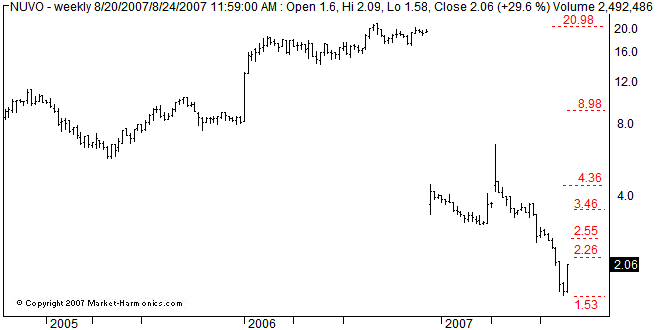
On Aug.16, NUVO fell to a historic low of 1.53, following a fierce sell-off from a high of 20.98 last September. Then in December, NUVO was sold off rather viciously by hedge funds when two clinical trials of their experimental drug alfimeprase failed to hit their predetermined targets. Short interest was already high, ridiculously high. Following the sell-off, and an aborted rally last April, the stock removed its previous bear market lows of 2003, reaching 1.53 last week. During the final stages of the selling, the company went through a series of drastic cost cutting measures, which saw layoffs and the resignation of its CFO, in an effort to get its financial house back in order. Nuvelo subsequently announced another Phase III clinical trial for alfimeprase in a higher dosage this time, attracting some investor interest, and an analyst upgrade. While we can't guarantee the stock's bear market is over, there should minimally be a 3-wave recovery, apparently already launched, which has the potential to get the stock back up to around 4.36. From current levels, this would yield a return of about 100%. More ideally, the stock will continue to advance in 5-wave patterns, further strengthening the case for a bear market bottom, and far greater upside potential. 2.26 is low level Fibonacci resistance.
Although there are options on the stock, the strike prices are too high to make them worth it with respect to Delta appreciation. NUVO is also cheap enough to buy and hold while profitable. Key support for the stock is its 1.53 bottom, and you therefore may want to limit your risk to just below that.
©Copyright 2007 Tony Carrion. All content presented is the exclusive property of Market Harmonics. com, which is owned & operated by T. Carrion & Co., LLC, and may not be duplicated or distributed without the express written consent of the author.